
Westward migration reshaped the American continent—and the Great Basin lay directly in its path.
In the early 1800s, trappers, explorers, and traders were the first non-Native people to cross this vast interior, following water and wildlife through an unforgiving landscape in pursuit of new opportunities.
In 1828, Peter Ogden traveled through the region while trapping beaver. A few years later, Joseph Walker led an expedition through the Great Basin that ended in a deadly clash between Native people and explorers—an early sign of the conflicts that would accompany migration into Indigenous homelands.
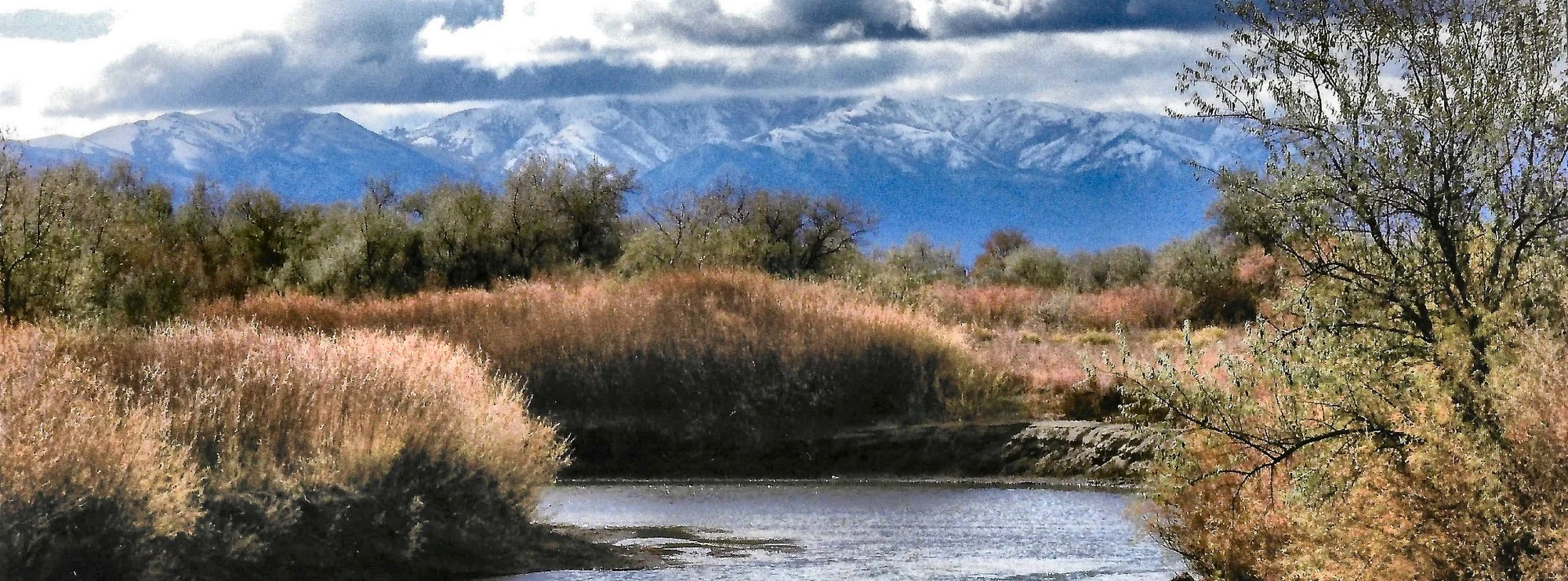
The turning point came in 1843 when John C. Fremont led a government-backed expedition across the Great Basin. His 1845 report and detailed maps transformed what had been rumor and guesswork into a usable route. After the United States acquired this land in 1848, thousands of Americans began moving west toward the newly discovered gold fields of California. Trails converged along the Humboldt River, which became the single most important corridor across northern Nevada.
The Humboldt route was essential… and dangerous. During the 1850s, violent conflicts between emigrants and Native peoples made this stretch of the Emigrant Road one of the most feared portions of the journey west. Still, desperation and ambition outweighed caution. By 1861, more than 200,000 people and nearly one million head of livestock had followed the Humboldt River westward. Many simply passed through, but others looked beyond California. When silver and other minerals were discovered across central Nevada, emigrants fanned out from the trail in search of new bonanzas, turning travel corridors into settlement zones.
This movement gave rise to permanent footholds near present-day Battle Mountain. Edwin Brierly may have been the first Euro-American to settle near Willow Creek in the summer of 1861, followed two years later by Ephraim Pickett, who lived along the Humboldt River just north of today’s townsite. Mining camps appeared, supply stops followed, and ranches soon dotted the valleys, serving both travelers and nearby mining districts.
Battle Mountain and Lander County quickly became a crossroads of cultures. English and Irish immigrants crowded the early mining district; Welsh settlers established ranches; Chinese laborers staffed hotels and restaurants; and Basque sheepherders left lasting cultural marks. People arrived from Ireland, Scotland, France, Canada, Germany, Italy, Switzerland, Mexico, and the Basque Country—many of whose descendants remain today. Encouraged by the Homestead Act of 1862 and sustained by traffic along the Emigrant Road, cattle and sheep ranching flourished.
What began as a route through the land became a reason to stay. And the next chapter of Lander County’s story began.
