
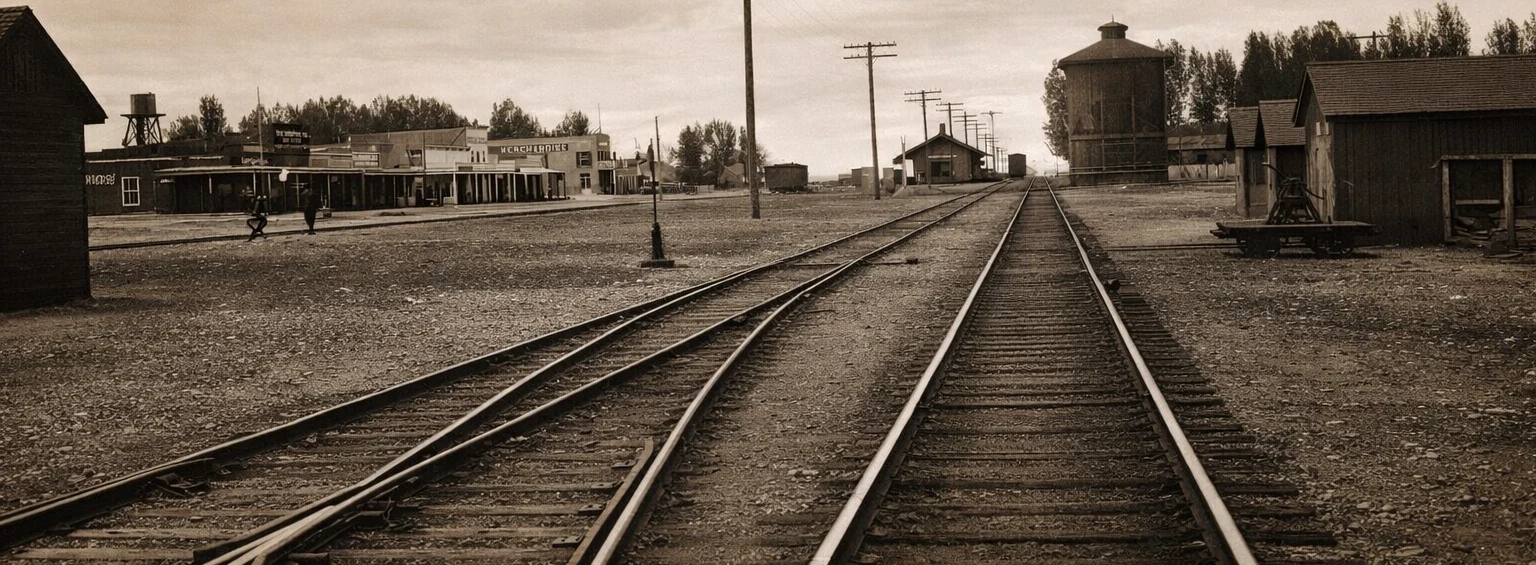
Between 1869 and 1870, the arrival of the Central Pacific Railroad transformed a quiet stretch of desert into a place worth stopping. Railroads determined survival in the West, and when the Transcontinental line crossed this area, it brought with it supplies, labor, and momentum. What followed was rapid growth, driven by nearby mines and the simple truth that towns flourished where trains slowed down.
The name Battle Mountain carries echoes of conflict that predated its founding. Between 1857 and 1862, multiple violent encounters occurred in the region—some between Native peoples and whites, others possibly between Shoshone and Paiute groups. No single battle can be definitively identified, but the memory of unrest lingers. When the Battle Mountain Mining District was organized in 1866, those stories likely influenced its name. A year later, mining discoveries made the name permanent: Robert McBeth uncovered silver and copper in Long Canyon at the Little Giant Mine and at Galena in Duck Creek, anchoring the district’s future.
Rail access soon followed mining success. In 1868, the railroad built a siding—known as the Battle Mountain Switch—to offload supplies bound for the mines. As production increased, so did traffic. McBeth and other mine owners pressed railroad executives for a proper station closer to the mining district. The company agreed and authorized McBeth to select the site. To mark it, he nailed a simple sign to a telegraph pole along the tracks, across from today’s Front Street. With that act, Battle Mountain was born.
Businesses and people quickly followed. In 1869, Lorenzo Dow Huntsman moved his Railroad Hotel to the new town, joined by J.W. McWilliam’s general store and others. Nancy and Dow Huntsman later operated the Capitol Hotel beside the depot, building a cottage nearby that still stands today. Their daughter, Emma Hancock, constructed a two-story house in 1870 behind the hotel, later converting it into a boarding house. Temporary shelter had become a permanent home.
The earliest residents shaped the town’s character through sheer versatility. Rosbum V. Kelley, the first settler at the Battle Mountain Switch, established a stage route to the Little Giant and Galena mines. Kelley and John Ansel Blossom built the first homes, while Blossom went on to touch nearly every corner of frontier enterprise—freighting, ranching, construction, newspapers, merchandising, and mining. He operated a lumber and coal business from the depot and built Battle Mountain’s first adobe structure at Reese and Front Streets, a building that still stands today as the Owl Club.
Battle Mountain was not planned. It was assembled, piece by piece, by people who recognized opportunity when a train finally stopped.
