
As a crossroads of migration, mining, and railroads, Battle Mountain’s story is a microcosm of the story of the American West. Explorers, writers, Indigenous leaders, railroad builders, and frontier figures are embedded in the town’s history.
One of the most famous voices of the West, Mark Twain, spent formative years in Nevada during the 1860s. While Roughing It does not mention Battle Mountain by name, Twain traveled the same stage routes, desert crossings, and rough towns that defined this area. The world he described—isolated stations, speculative mining camps, hard travel, and sudden fortune— captured the spirit of Nevada at the moment places like Battle Mountain were forming.
Frontier legends also moved through these corridors. Before becoming a national celebrity, Buffalo Bill Cody worked as a scout and Pony Express rider across the Great Basin. Battle Mountain was a Pony Express station, making it likely Cody passed through or stayed briefly while riding or working supply routes.
Equally important are the voices too often overlooked. Sarah Winnemucca, a Northern Paiute leader, author, and advocate, traveled extensively across northern Nevada during the same period Battle Mountain was forming. Her writings and speeches documented Indigenous life, displacement, and resilience in a rapidly changing West. Her life reflects the Indigenous perspective of places like Lander County: lands crossed, claimed, and transformed within a single generation.
Amelia Earhart landed her experimental Pitcairn Autogiro PCA-2 plane in Battle Mountain on June 5, 1931. She was en-route to California just after setting a new world record and, while waiting for the unusual aircraft to be checked and fueled, she stayed for about 30 minutes chatting with the crowd and posing for photographs. She also gave words of encouragement to the girls in the crowd who rushed out to the airfield to see her land her aircraft.
Battle Mountain’s history is also defined by people who became famous locally rather than nationally: mine owners like Robert McBeth, ranchers such as W. T. Jenkins and Edith Jenkins, railroad agents, hotelkeepers, doctors, teachers, and immigrant families whose names mark buildings and landscapes. Their influence was quieter but longer-lasting.
Notable Historical Events:
Nevada’s First Women’s Suffrage Convention: On July 4, 1870, the Capitol Hotel hosted the first women suffrage convention in the state and created a woman’s suffrage organization.
Nevada’s First Woman Sheriff: When George Crowell died in office in 1919, his wife Clara was appointed to succeed him as Lander County Sheriff. As sheriff, Clara personally broke up saloon fights and arrested participants, also going after bootleggers selling whiskey to Natives. Revered for charity and kindness, she served with distinction.
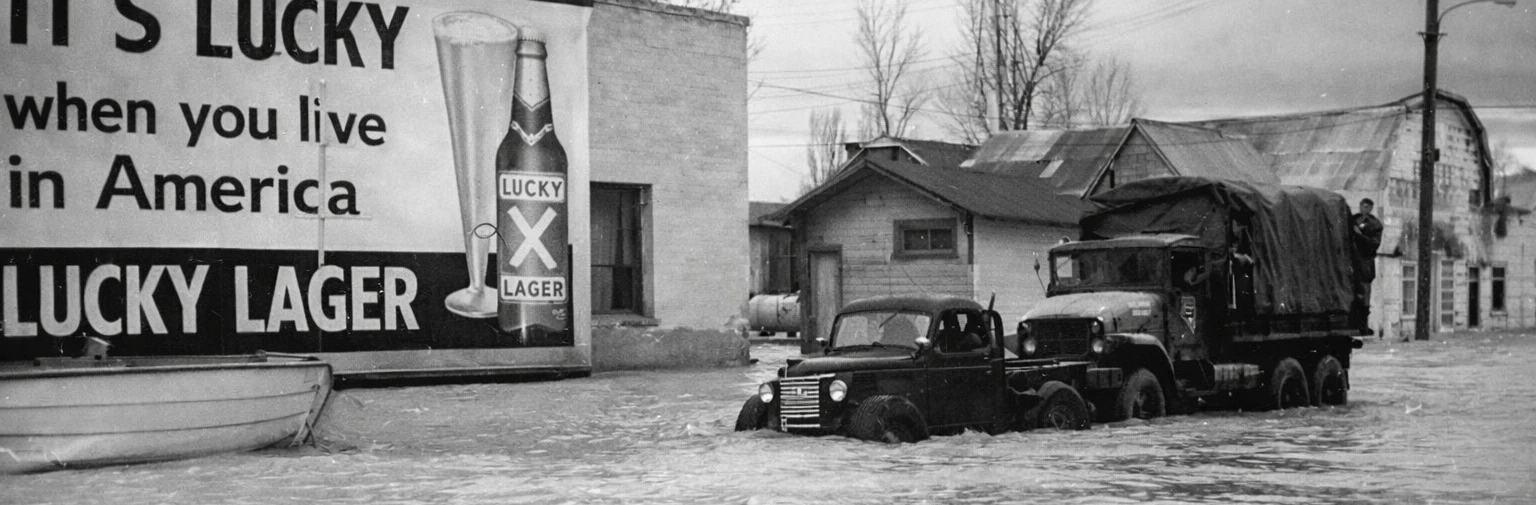
The Flood of 1962: The flood was a disaster of monumental proportions and the result of a perfect storm. Heavy snow was followed by a hard freeze and then a deluge of rain. The Reese River flooded, causing the waters to come roaring into Battle Mountain. They swept away anything that was not nailed down, popping open car doors, revealing old cesspools, and filling basements with three feet or more of water. Town and business records, including the cemetery inventory, were ruined, and an untold number of historic photographs, documents, and other artifacts were covered with mud and carted off to the dump. Nearly 700 people were evacuated; businesses and schools were demolished; and the sewer system was overwhelmed. The National Guard was called in to assist with rescue operations.
The First Transcontinental Air Race: In 1919, Battle Mountain built its first long airstrip just south of town in order to participate in the country’s first transcontinental air race, organized by the U. S. Army and the American Flying Club of New York. The race between San Francisco and New York would demonstrate the possibilities of establishing a transcontinental air mail service and commercial flights. The race’s only designated Nevada stops were Reno and Battle Mountain, which had been chosen because one of the race’s planners was Captain Lowell H. Smith who had briefly lived here and argued that Battle Mountain had the best landing spot in Northern Nevada. Although Smith did not win the race, Battle Mountain celebrated its favorite pilot and his flying colleagues with a big party and presented Smith with a gold nugget stick pin as a memento.
